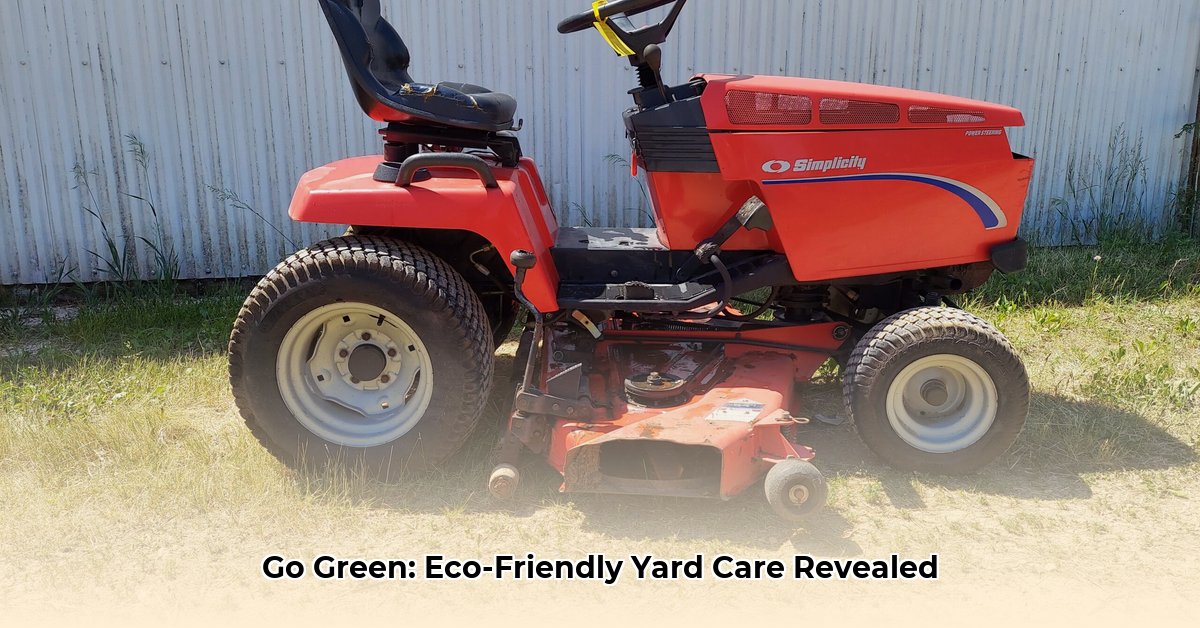
Thinking about purchasing a Simplicity yard tractor? Your choice can significantly impact your lawn's health and the environment. This guide examines Simplicity tractors' role in sustainable landscaping, exploring their fuel efficiency, ease of maintenance, and long-term costs. We'll also compare them to alternatives and provide actionable steps for responsible ownership, helping you determine if a Simplicity tractor aligns with your sustainable lawn care goals. For more information on Simplicity tractors, visit the Simplicity website.
Fuel Efficiency: A Greener Mow?
Simplicity yard tractors, particularly the Conquest series, often utilize Briggs & Stratton engines known for relatively good fuel economy. The Conquest's Electronic Fuel Management (EFM) system further enhances fuel efficiency. However, quantifying the fuel savings compared to other lawn care methods requires more data. Comparative studies on gallons per acre or mowing hour are needed to definitively assess Simplicity's fuel efficiency advantage. This crucial information would solidify its position as a fuel-saving option.
Gentle on the Grass: Minimizing Lawn Damage
Many Simplicity tractors feature a "Free Floating Mower Deck" with rollers, promoting gentler cutting compared to other mowers. This design minimizes soil compaction, leading to healthier grass and a more environmentally friendly approach. The reduced soil stress may also lessen the need for fertilizers and potentially harmful chemicals. Isn't preserving soil health a key component of sustainable landscaping?
Longevity and its Environmental Impact: The Long Game
A long-lasting lawn tractor reduces the need for replacements, benefiting the environment. Simplicity tractors often include features like the Quick Hitch™ system, simplifying maintenance and potentially extending lifespan. However, a complete environmental assessment necessitates considering the entire product lifecycle. A comprehensive Life Cycle Assessment (LCA) is crucial to truly understand the environmental impact from manufacturing to disposal.
Addressing the Knowledge Gaps: The Need for Further Research
While reduced fuel use and soil compaction are positives, a complete picture demands more data. We lack comprehensive information on the energy and materials used in Simplicity tractor manufacturing. Determining the carbon footprint of the production process is essential for a holistic sustainability evaluation. Similarly, data on the ease of recycling or responsible disposal at the end of the tractor's life is crucial, highlighting the need for a comprehensive LCA (Life Cycle Assessment). Without this information, declaring its overall sustainability remains premature.
Actionable Steps for Sustainable Lawn Care
This section provides specific steps for consumers, manufacturers, researchers, and government agencies to promote sustainable lawn care practices.
For Consumers:
- Prioritize Fuel Efficiency: When purchasing a lawn tractor, thoroughly research models with fuel-efficient engines. Don't solely rely on advertised horsepower.
- Consider Total Cost of Ownership: Evaluate the long-term costs, encompassing fuel, maintenance, and eventual disposal or resale. A well-maintained Simplicity tractor can offer significant long-term savings and reduced waste.
- Responsible Disposal: Research local recycling or disposal options for old lawn equipment. Avoid simply abandoning it.
For Manufacturers (like Simplicity):
- Transparency is Key: Conduct and publicly release a comprehensive LCA (Life Cycle Assessment) detailing the tractor's environmental impact throughout its entire life cycle.
- Develop End-of-Life Solutions: Create and implement a robust plan for recycling or responsible disposal of used products. This demonstrates a commitment to sustainability.
For Researchers:
- Real-World Data: Conduct rigorous research comparing fuel consumption, soil compaction, and overall environmental impact of various lawn care methods. We need hard data to support claims.
- Holistic Approach: Investigate all aspects of sustainable lawn care, including manufacturing, transportation, maintenance, and end-of-life management.
For Government Agencies:
- Incentivize Sustainability: Implement programs incentivizing eco-friendly lawn equipment purchases, such as tax breaks or rebates.
- Establish Higher Standards: Establish and enforce stricter regulations on equipment emissions and end-of-life management.
Conclusion: Towards a Greener Lawn
While Simplicity yard tractors may offer certain environmental advantages over heavier equipment, a complete sustainability assessment requires more data. Transparency regarding manufacturing processes and end-of-life management is essential. By demanding thorough research and advocating for sustainable practices, we can make informed decisions and contribute to a greener future for our lawns and the planet. The journey towards sustainable lawn care requires collective effort.